







A firm can post record revenue and still be nearly impossible to transfer. If the founder approves every major decision, holds the key client relationships, and resolves operational problems personally, there is no durable enterprise behind the revenue. The top law firm succession strategies address that reality early: they replace owner dependence with leadership capacity, documented systems, financial discipline, and a credible path for the next generation.
Succession is not a retirement event. It is an enterprise-value project. The best time to begin is while the owner still has the energy, authority, and runway to build a management bench and correct the weaknesses that would concern a buyer, successor, lender, or key employee.
Why Most Law Firm Succession Plans Fail
Many firms treat succession as a conversation about ownership percentages. That conversation matters, but it comes too late if the firm cannot operate without its current owner. A buy-sell agreement does not fix a leadership vacuum. An internal sale does not work if future owners cannot afford the purchase or do not know how to run the business.
The most common failure is confusing client loyalty with firm value. Clients may trust the firm, but they often have a direct relationship with one partner. If that partner steps back, retires, becomes unavailable, or simply stops carrying the firm, revenue can leave quickly. The same problem appears internally when senior staff depend on the owner for decisions about pricing, staffing, collections, exceptions, and priorities.
A succession plan also fails when it is not supported by numbers. Owners may have an idea of what the firm is worth, but cannot show consistent profitability by practice group, reliable realization, clean balance-sheet records, predictable cash flow, or a documented history of leadership performance. Hope is not a valuation method.
The Top Law Firm Succession Strategies Start With Transferability
The central question is straightforward: what must be true for this firm to perform at its current level when the owner is no longer the operating center? The answer should drive every succession decision.
Build a leadership bench before naming successors
Naming a successor is not the same as developing one. A capable attorney may be an exceptional producer but have little experience leading people, managing financial performance, or making cross-firm operational decisions. Those are different jobs.
Identify the future leadership roles the firm actually needs. Depending on size, that may include a managing partner, executive director, operations leader, finance lead, practice leaders, and client-service managers. Then define what each role owns: revenue, margin, capacity, hiring, billing performance, client retention, or execution of firm priorities.
Development should be measurable. Give potential successors responsibility for a business result, not a vague title. For example, a practice leader might own utilization, realization, staffing levels, matter intake quality, and collections for a defined group. Review performance monthly. If someone cannot lead a smaller operating unit with accountability, they are not ready to inherit the larger enterprise.
This process can be uncomfortable. Some firms discover that their preferred successor is not prepared, while another leader has more operational potential. That is useful information when there is time to act. It is painful when the owner needs an exit within twelve months.
Separate relationships from individual rainmakers
A firm with concentrated client relationships has a succession risk, even if its revenue is strong. The goal is not to erase the founder's relationships. It is to institutionalize them.
For significant clients, establish relationship maps that identify the primary contact, service team, billing patterns, active matters, referral sources, communication cadence, and expansion opportunities. Require at least two meaningful firm relationships for major accounts. Bring emerging leaders into meetings before a transition is imminent, and make their responsibilities visible to the client.
This is also where client service systems matter. Consistent onboarding, communication standards, matter updates, and issue escalation reduce the risk that service quality lives only in one person's judgment. A client should experience the firm's operating standard, not one owner's personal style.
Create financial capacity for an internal transition
Internal succession is attractive because it can preserve culture and continuity. It also creates a financing problem. Future owners may be talented but lack the personal capital to purchase a meaningful stake outright.
The firm needs a practical funding model. That might include seller financing, compensation deferrals, staged equity purchases, insurance-backed contingency planning, or retained earnings that strengthen the balance sheet before the transition. The right structure depends on profitability, partner compensation, cash reserves, debt capacity, and the time horizon.
Do not make the mistake of funding an owner's exit by starving the business. If successor payments leave no room for technology, recruiting, marketing, administration, or working capital, the firm may decline precisely when it needs stability. A sound transition model protects the departing owner while preserving the firm's ability to perform.
Put governance ahead of personalities
Succession becomes political when decision rights are unclear. Firms need written governance that answers practical questions: Who can admit an owner? Who sets compensation? How are disputes resolved? What happens if a successor underperforms? What authority remains with a retiring founder during the transition?
These discussions are not glamorous, but avoiding them creates expensive ambiguity. The operating model should distinguish ownership from management. Not every equity holder should make every operational decision, and not every operational leader must be an equity owner. Clear roles allow the firm to select leaders based on capability rather than seniority alone.
A transition period can be valuable, but it needs boundaries. The founder may remain available for strategic relationships, institutional knowledge, and planned introductions. The successor must still have real authority. If every difficult decision returns to the former owner, the organization learns that the succession was not real.
Make the Firm Valuable Before You Put a Price on It
A succession plan gains credibility when the firm can demonstrate repeatable performance. That requires an operating discipline that many growing firms postpone until they are forced to confront it.
Start with financial visibility. Leadership should be able to review revenue, collected revenue, realization, accounts receivable aging, payroll ratio, operating margin, cash position, and partner distributions on a regular cadence. Reports should explain what happened, why it happened, and who owns the next action. Financial statements alone are backward-looking; scorecards turn financial data into management behavior.
Then examine operational concentration. Where does work stall? Which decisions require owner approval? Which team members hold critical knowledge in their heads? Where does billing leakage occur? Which roles have no backup? These are not isolated administrative frustrations. They are transferability risks.
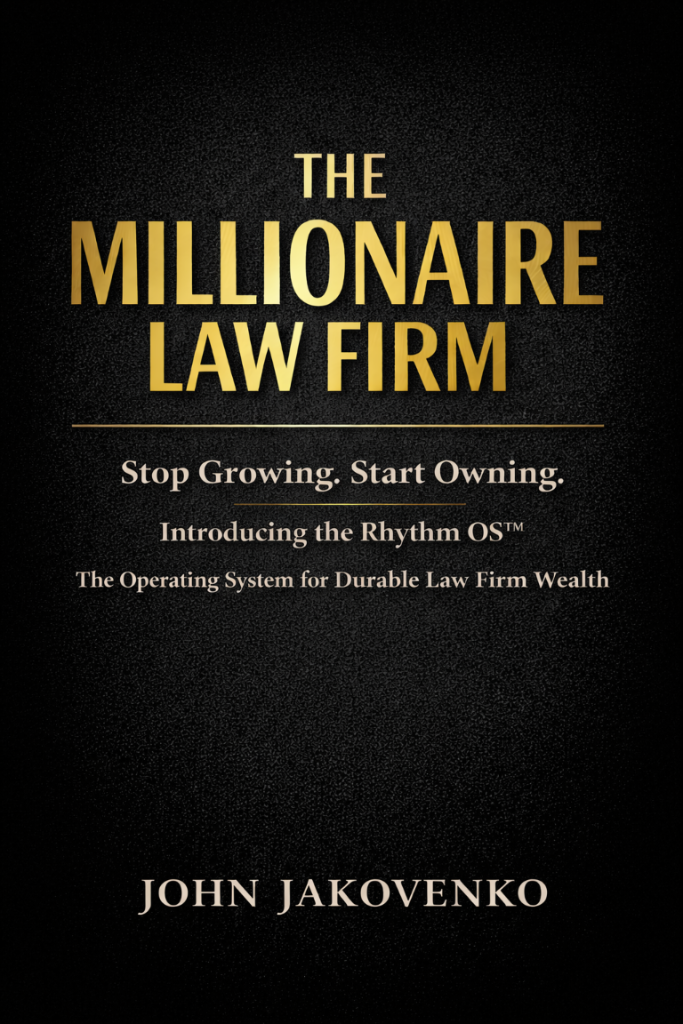
A system such as Rhythm OS can help leadership assess these interdependencies across finance, people, operations, marketing, and client service. The point is not to add another management initiative. It is to create a firm that produces results through a clear operating rhythm rather than through the constant intervention of one owner.
A 24-Month Succession Execution Plan
A useful succession plan has dates, owners, and evidence of progress. Without those elements, it is an intention that will lose to urgent client work and daily operational demands.
In the first six months, conduct an ownership and operational diagnostic. Establish the owner's likely transition timeline, assess leadership readiness, identify revenue concentration, review governance documents, and build a baseline of firm financial performance. This period should end with a written risk register and a ranked implementation roadmap.
During months seven through twelve, begin transferring responsibility. Assign leaders measurable operating roles, document core processes, introduce additional relationship owners to key clients, and establish scorecards. The founder should deliberately stop handling selected categories of decisions, while monitoring whether the new structure produces acceptable results.
In months thirteen through eighteen, test the bench. Have successor leaders run meetings, manage performance issues, lead planning cycles, and make decisions with real consequences. Measure results against targets. If gaps appear, address them through coaching, role changes, or recruiting rather than pretending the plan is on track.
The final six months should focus on formal transition mechanics: ownership transfer milestones, funding arrangements, communications, contingency plans, and the founder's post-transition role. By this point, the firm should not be merely preparing to operate without the owner. It should already be proving that it can.
The Question Owners Should Ask Now
The most useful succession question is not, “Who will take over?” It is, “What would fail here if I were gone for ninety days?” The honest answers reveal the work.
Build the systems, leadership capacity, and financial discipline that allow the firm to answer that question with confidence. A firm that can continue performing without its founder is not only easier to transition. It is more profitable, more stable, and more valuable while the founder is still leading it.