





Impact-Site-Verification: 05f65c6e-3e2e-4de6-988d-3e1bf4ae7646Skip to main content
Fractional COO for Law Firms

Growth without freedomis just a bigger job.

I'm John Jakovenko, a fractional COO for firms with 5 to 50 attorneys. I've run operations inside hundreds of law firms. I install the system that runs yours so it stops depending on you.

Books by John Jakovenko

The Library

Three books on law firm operations, wealth, HR, and AI — all available on Amazon.

The Millionaire Law Firm — Stop Growing. Start Owning.
Bestseller

The Millionaire Law Firm

Stop Growing. Start Owning.

Introducing the Rhythm OS™ — the operating system for durable law firm wealth. Not a growth playbook. An ownership framework.

Managing the Unmanageable — HR in a Law Firm
New Release

Managing the Unmanageable

HR in a Law Firm

The HR system for law firms that always felt impossible to manage — hiring, accountability, leverage, and culture built for a legal practice.

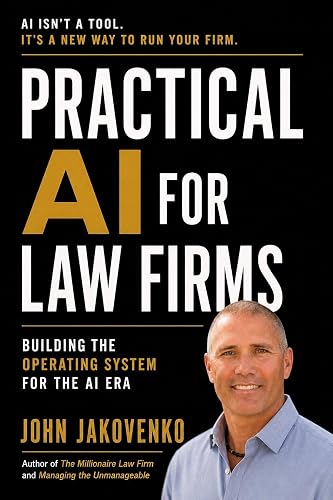
Practical AI for Law Firms — Building the Operating System for the AI Era
New Release

Practical AI for Law Firms

Building the Operating System for the AI Era

How small and mid-sized law firms actually adopt AI — prompts, workflows, staff rollout, and the systems that make AI stick beyond week three.

📘 The Millionaire Law Firm — Now Available (Kindle + Hardcover)Get Your Copy
Rhythm OS™

Free Law Firm Diagnostics

Many law firms grow revenue but never build real owner wealth. The Rhythm OS diagnostic tools analyze your firm's financial structure and operational leverage to reveal where margin and partner time are being lost.

Profit Margin Diagnostic

Upload your firm's Profit & Loss statement and instantly calculate your operating margin, labor ratio, and overhead structure.

Law Firm Scorecard

Assess your firm's operational structure, staffing leverage, and growth readiness across key Rhythm OS metrics.

Framework

What is Rhythm OS?

Rhythm OS is a framework designed to help law firm owners convert revenue into real owner wealth.

Instead of focusing only on growth, the framework analyzes the structural drivers of profitability inside a firm:

  • ◆Collection velocity
  • ◆Staffing leverage
  • ◆Operating margin
  • ◆Owner compensation structure

These diagnostics provide a quick way to identify where firms are unintentionally compressing their own profitability.

The Operating System

Software that runs the firm — not just advice about it.

The same systems I install as your COO, packaged so your firm can run them every day. Start free. Grow into the platform. Bring me in when you’re ready to scale.

FREE TOOL

Tempus

AI passive timekeeping for attorneys. It watches your work quietly and drafts your billable time so nothing leaks.

Recover the hours you’re already working but never capturing.

PLATFORM

LawStaff

AI staff that keep every client informed, run your billing cycle, and act on your docket — communication-first, so malpractice never starts with silence.

Kill the #1 bar complaint: no communication.

DONE WITH YOU

Fractional COO

I install the operating system and the staff, then run the rhythm with you until the firm is profitable, compliant, and calm.

AmLaw 200 discipline, sized for your firm.

Free tool → platform → partner. Step on wherever you are.

What We Do

Legal Administration. That's it.

We work one-on-one with you to achieve your goals, not ours. Take the Ownership Review to identify your firm's operational gaps.

Clio Affiliate Partner

Law Firm Financial Management & CFO Advisory Services

Your Map to a More Profitable Law Firm

You know where your firm is today. But do you know exactly where your revenue, profitability, and cash flow will be six months from now? As a law firm financial consultant and fractional CFO, we help firm owners build financial clarity, predictability, and accountability — so you can stop reacting and start leading.

Law Firm Financial Statement Analysis

If you don't understand your numbers, you can't improve them.

We provide detailed law firm financial statement analysis including:

Profit & loss review

Partner compensation modeling

Expense ratio benchmarking

Revenue per attorney analysis

Payroll and staffing cost evaluation

Cash flow forecasting

Know exactly what your law firm is generating, what it's spending, and where profit is leaking.

Law Firm Budgeting & Profit Planning

Profit doesn't happen by accident.

We build structured, data-driven budgets for law firms that align:

Revenue targets

Attorney billable hour goals (yes — 1800 rhythm 😉)

Marketing investment

Staffing strategy

Partner distributions

A proper law firm budget ensures you hit your financial objectives without constantly stressing about payroll.

Law Firm Bookkeeping Oversight & Financial Controls

Overpaying for bookkeeping without strategic insight?

We provide law firm bookkeeping oversight and financial system structure so your data is:

Accurate

Timely

Categorized properly

Decision-ready

Bookkeeping should support strategy — not just compliance.

Law Firm Billing Optimization

Nothing destroys cash flow faster than weak billing systems.

We improve:

Timekeeping compliance

Billing cycle consistency

Lock-up reduction

Realization rates

Work-in-progress monitoring

Your billing practices should generate revenue — not delay it.

Law Firm Collections Strategy & Cash Flow Management

Revenue isn't real until it's collected.

We build law firm collections systems that improve:

Accounts receivable aging

Payment plan tracking

Client communication cadence

Cash forecasting

Without a structured collections process, even high-revenue firms run out of cash.

Work With a Fractional Law Firm CFO

If you're a growing law firm that needs financial leadership but isn't ready for a full-time CFO, our fractional law firm CFO services provide:

Strategic financial planning

Operational accountability

KPI tracking

Profit improvement strategy

Stop guessing. Start scaling with clarity.

Law Firm Operations Consulting & Back Office Management

From AmLaw 200 Systems to Your Law Firm

We've implemented operational systems inside AmLaw 200 firms — and we bring that same discipline and structure to growth-focused law firms across the country. Your firm is unique. But operational efficiency, financial discipline, and revenue systems follow proven frameworks. Let's build a law firm back office that runs so smoothly it becomes an afterthought — not the thing consuming your entire day.

Strategic Planning for Law Firms

Most firms don't lack ambition. They lack structured execution.

Our law firm strategic planning services include:

Operational gap analysis

Revenue and staffing alignment

Departmental performance review

Leadership accountability structure

Growth roadmap development

We evaluate where your firm is today versus where you want to be — and design a clear operational plan to close that gap.

Law Firm Process Improvement & Workflow Design

Late deliverables. Bottlenecks. Client frustration. Attorney burnout.

These are operational failures — not legal failures. We implement structured law firm workflow systems including:

Case lifecycle mapping

Intake-to-collection workflow optimization

Project management structure

Role clarity and delegation models

Task tracking systems (Monday, Asana, etc.)

Operational discipline increases both client satisfaction and firm profitability.

Law Firm Operational Analysis & Systems Implementation

You cannot improve what you do not measure.

Our law firm operational analysis includes:

Staffing efficiency review

Attorney productivity benchmarking

Administrative capacity modeling

Payroll-to-revenue ratio evaluation

Department performance metrics

We measure your current structure and implement systems that align operations with growth.

Law Firm KPI & Performance Reporting

What gets measured gets managed.

We design custom KPI dashboards for law firms that track:

Revenue per attorney

Billable hour attainment (yes — your 1800 rhythm 😉)

Realization and collection rates

Case cycle times

Marketing ROI

Staff productivity

Data removes emotion. Metrics create accountability. Accountability drives profit.

Fractional COO & Law Firm Administrator Services

If your firm needs operational leadership but isn't ready for a full-time COO or firm administrator, our fractional law firm COO services provide:

Executive-level operational oversight

Strategic planning facilitation

Leadership accountability

Departmental alignment

KPI reporting and executive dashboards

You don't need more chaos. You need operational clarity.

Law Firm Human Resources & People Operations Consulting

Building High-Performance Legal Teams

Your firm doesn't just employ staff. You lead attorneys, paralegals, intake teams, and administrators whose performance directly impacts revenue, client satisfaction, and firm culture. We provide law firm HR consulting and people operations strategy designed specifically for legal practices — not generic businesses. Because law firms are different.

Law Firm Policies & Employee Handbooks

Without structured policies and clear work rules, law firms expose themselves to unnecessary employment risk.

We draft and implement:

Law firm employee handbooks

Attorney employment agreements

Performance expectations frameworks

Compensation and bonus policies

Remote work and hybrid policies

Compliance-driven HR documentation

Proper policies reduce litigation risk and create operational clarity.

Law Firm Performance Management Systems

Great firms don't happen by accident. They're built on accountability.

We design structured law firm performance management systems that align:

Attorney billable hour targets (yes — the 1800 rhythm 😉)

Realization and collections metrics

Paralegal productivity standards

Intake conversion goals

Department-level KPIs

When expectations are clear, performance improves. When performance improves, profitability follows.

Employment Law Compliance for Law Firms

Many firm owners assume they understand employment law — because they're lawyers.

But employment law compliance is nuanced and constantly evolving. We help law firms implement:

Wage and hour compliance systems

Exempt vs. non-exempt role classification

Proper documentation practices

Termination risk protocols

Leave management processes

Protect your firm from preventable employment-related claims.

Law Firm Payroll Administration

Payroll errors damage morale and create legal risk.

We provide structured payroll oversight and administration for law firms to ensure:

Accurate compensation tracking

Bonus calculation alignment

Attorney compensation modeling

Payroll-to-revenue ratio analysis

Payroll isn't just administrative — it's strategic.

Law Firm Benefits Strategy & Administration

Attracting and retaining top legal talent requires more than salary.

We work with your benefits brokers to design cost-effective, competitive benefit packages including:

Health insurance optimization

HSA and FSA strategy

Retirement plan alignment

Cost-sharing analysis

Benefits benchmarking for law firms

The right benefits structure improves retention without crushing margins.

Fractional HR Leadership for Law Firms

If your firm needs structured HR leadership but doesn't require a full-time HR director, our fractional law firm HR services provide:

Policy development

Performance management design

Compliance oversight

Compensation structure alignment

Leadership coaching

Strong firms are built on strong people systems.

How Small & Mid-Size Law Firms Compete with Big Law

Enterprise-Level Systems Without Enterprise Overhead

Large law firms don't win because they're smarter. They win because they have systems. Financial discipline. Structured operations. Performance accountability. Dedicated administrative leadership. The truth? Mid-size and growing law firms can implement the same operational infrastructure — without the massive overhead. That's where we come in.

Enterprise-Grade Law Firm Operations

We bring AmLaw 200-level operational structure to growth-focused law firms, including:

CFO-level financial management

COO-level operational oversight

Structured HR and performance systems

KPI dashboards and accountability models

You don't need 300 attorneys to run like a 300-attorney firm. You need leadership systems.

Competitive Advantage Through Operational Excellence

Your competitive advantage is not lower rates.

It's:

Faster response time

Better client experience

Higher attorney productivity

Predictable cash flow

Professional administration

Operational excellence allows smaller firms to compete directly with larger competitors — without sacrificing profitability.

Scalable Law Firm Systems That Grow With You

Chaos doesn't scale. Systems do.

We design scalable law firm management systems that evolve as you:

Add attorneys

Expand practice areas

Increase marketing spend

Grow into multi-location firms

Growth without structure leads to stress. Growth with structure leads to dominance.

Watch

When Should You Hire an Administrator?

Discover the right time to bring professional administration into your law firm. Not sure if you're ready? Take the Ownership Review.

Who We Are

We're on a mission to run your law firm with peace of mind.

John M. Jakovenko

John M. Jakovenko

CLM, MAC, MBA, SPHR, SHRM-SCP

Firm Administrator

John is a leading expert on all things business of law. Since 2006, John has devoted his career to law firm management working with firms of all sizes and in various states. He also teaches the Association of Legal Administrators Business of Law HR courses as well as the HR section of the Legal Management Fundamentals course, helping new administrators navigate their first five years in law firms.

John M. Jakovenko with best friend

"Life's too short not to bring personality to work. Meet my partner in crime — keeping things fun while we revolutionize law firms."

Our Philosophy

Who We Are NOT

We are your trusted advisor and law firm operations specialists.

We are not administrative assistants helping you accomplish menial tasks.

We do not provide one-size-fits-all solutions.

We do not implement systems without understanding your unique practice.

We help you work smarter, make more money, and reclaim your time to focus on what you do best: practicing law. Assess your systems health in 3 minutes.

Strategic Focus

We align operations with your firm's strategic objectives, not generic best practices.

Revenue Focus

Every recommendation is designed to improve profitability and cash flow.

Proven Expertise

Experience from AmLaw 200 firms to boutique practices across multiple states.

Partnership Model

We work alongside you as an extension of your team, not just external consultants.

15+
Years of Experience
100+
Law Firms Served
4
Global Locations

Trusted by Law Firms Nationwide

Don't just take our word for it

"Our experience with The Jakovenko Group has been nothing short of transformative for our firm. John and his dedicated team bring a wealth of human resource and management expertise that truly set the foundation for our next level of growth. His impact on our firm, and on me personally, has been immeasurable."

Law Firm Partner

"John has helped me make huge steps in the operation of my firm. It's allowed me to start 'working on my business' instead of 'working in my business'. He's patient and helps you see your blind spots. I can't recommend him enough."

Boutique Law Firm Owner

"I am part of a boutique law firm that has retained John's services, and he is an amazing resource. He is adaptive to the needs of his clients, and tailors solutions to their specific areas and goals. Our firm doesn't want to lose that character of what makes it unique, but also understands that with expansion comes evolution."

Law Firm Partner

"Working with John has been nothing but a pleasure. He's always ready to teach, help or guide you. Since working with him, our firm has improved immensely and continues to excel!"

Law Firm Administrator

"John jumped in when the organization needed him. He brought his expertise, calm/cool, and sense of humor with him. He is relatable, reliable and even."

Legal Organization

"Extremely competent, Efficient, Easy to Work with and Always Available. Highly recommend. He did a Great Job!"

Law Firm Client

"Our experience with The Jakovenko Group has been nothing short of transformative for our firm. John and his dedicated team bring a wealth of human resource and management expertise that truly set the foundation for our next level of growth. His impact on our firm, and on me personally, has been immeasurable."

Law Firm Partner

"John has helped me make huge steps in the operation of my firm. It's allowed me to start 'working on my business' instead of 'working in my business'. He's patient and helps you see your blind spots. I can't recommend him enough."

Boutique Law Firm Owner

"I am part of a boutique law firm that has retained John's services, and he is an amazing resource. He is adaptive to the needs of his clients, and tailors solutions to their specific areas and goals. Our firm doesn't want to lose that character of what makes it unique, but also understands that with expansion comes evolution."

Law Firm Partner

"Working with John has been nothing but a pleasure. He's always ready to teach, help or guide you. Since working with him, our firm has improved immensely and continues to excel!"

Law Firm Administrator

"John jumped in when the organization needed him. He brought his expertise, calm/cool, and sense of humor with him. He is relatable, reliable and even."

Legal Organization

"Extremely competent, Efficient, Easy to Work with and Always Available. Highly recommend. He did a Great Job!"

Law Firm Client

What's keeping you up at night?

Are you ready for the next level of

legal administration?

LegalAdministrator.ai|

The AI Workforce for Law Firms

Big-law departments. Solo-firm payroll.

Lawstaff is the AI operations staff for small law firms — trained on your firm, governed by your playbooks, and supervised by you. Reception, intake, research, case management, billing, collections, and marketing, each with a name and a specialty.

40%

of a solo attorney's day is unbillable admin work

78%

of callers hire the first firm that actually answers

$118k

average unbilled time lost per lawyer, per year

A Workforce, Not a Chatbot

Eleven AI staff members — reception, intake, research, billing, collections, marketing — each with a name, a specialty, and real KPIs.

The Approval Gate

Nothing reaches a client, a court, or your books without your sign-off. Autonomy where it is safe; your hand where it is law.

Numbers You Can Manage

Every staff member carries real numbers — response time, matters moved, time captured, AR recovered — and is measured on them.

Meet the firm behind your firm

AT

Atticus

Legal Administrator

PE

Pearl

Receptionist

MA

Marlowe

Intake Specialist

HA

Harper

Legal Assistant

LX

Lex

Research Attorney

CA

Casey

Case Manager

QU

Quinn

Billing Clerk

MR

Marshall

Collections Officer

Let's Talk

Ready to Transform Your Practice?

Schedule a confidential consultation to discuss your firm's unique challenges and goals.

All consultations are confidential. We respect attorney-client privilege.

Direct Contact

Phone

470-567-1980

1-888-FL Admin

Email

john@jakovenko.com

Address

12655 Birmingham Hwy, Suite 302

Milton, GA 30004

Our Office

Why Work With Us?

  • AmLaw 200 experience at boutique firm pricing
  • Immediate impact on profitability
  • Flexible engagement models
  • No long-term contracts required

How to Align Law Firm Departments for Profit

How to Align Law Firm Departments for Profit

A firm can post record revenue and still be badly misaligned. Intake pushes new matters through the door, attorneys carry growing workloads, billing lags, collections become a month-end fire drill, and HR scrambles to fill roles nobody planned for. Each department is working hard. The firm, however, is not operating as one business.

That is the core problem behind how to align law firm departments. Alignment is not getting people into the same meeting or asking departments to cooperate more. It is building a management system in which every function works from the same priorities, numbers, decisions, and accountability.

For a law firm owner, the payoff is substantial. Alignment reduces billing leakage, improves cash predictability, prevents hiring from becoming reactive, and makes growth less dependent on the owner personally holding every department together.

Why departments drift apart

Departmental misalignment is usually designed into the firm, even if no one intended it. Partners focus on client work and revenue. Finance focuses on collections and expense control. Marketing focuses on leads. Operations focuses on capacity and process. People leaders focus on hiring and retention.

Those are legitimate priorities. The problem begins when each function measures success independently. Marketing can celebrate lead volume while intake struggles to respond quickly enough. Attorneys can celebrate hours worked while finance sees aged work in process. Operations can implement a more disciplined workflow while partners make exceptions that erase the discipline.

The result is local optimization. Each department improves its own activity while the firm loses performance at the handoffs between departments.

A growing firm cannot solve this through goodwill. It needs a shared operating model that makes the trade-offs visible. More matters are not automatically better if the firm lacks attorney capacity, the right support structure, or the billing discipline to convert that work into cash. Faster hiring is not automatically better if the firm has not defined the role, manager, scorecard, and economics of the position.

How to align law firm departments around the business

Start with the firm-level outcomes that matter most. For most established firms, that means profitable revenue, cash flow, capacity, client service performance, talent retention, and reduced owner dependence. The precise mix will vary by firm, but it should be limited enough to drive decisions.

A useful test is simple: can every department leader explain how their work affects the firm’s annual priorities? If the answer is vague, the firm has activity but not alignment.

Build one scorecard, not five separate reports

Most firms have plenty of data and very little management information. The managing partner sees revenue. The controller sees collections. Marketing has lead reports. Operations tracks work in progress. None of those reports, standing alone, explains whether the firm is on track.

Create a single executive scorecard with a defined owner for every number. It should connect the commercial engine to the delivery engine and the financial result. For example, new signed matters, intake conversion, attorney capacity, work in process, billing timeliness, collection rate, payroll as a percentage of revenue, and operating profit should be viewed together.

This changes the conversation. A drop in collections is no longer only finance’s problem. Leaders can see whether it began with weak engagement terms, delayed time entry, slow invoice review, poor follow-up, or a capacity problem that left work stalled.

Do not overload the scorecard. Ten to fifteen measures are usually enough at the executive level. Departments can maintain supporting detail, but the leadership team needs one version of the truth.

Set shared goals at the handoffs

The highest-cost failures in a law firm often occur between functions. A lead is generated but not contacted promptly. A matter is signed but not set up correctly. Work is completed but time is not entered. An invoice is issued but no one owns the follow-up. A new employee is hired but receives no structured onboarding.

Assign shared measures to these handoffs. Marketing and intake should jointly own speed to response and qualified conversion. Intake, operations, and finance should jointly own clean matter setup. Practice leadership and finance should jointly own billing cycle time and realization. Department heads and HR should jointly own time to productivity for new hires.

Shared goals prevent the familiar pattern in which one leader says, “My team completed its part,” while the business result still suffers. They also force clearer process design. If three departments touch a workflow, the firm must define who owns the outcome, who performs each step, and what happens when a standard is missed.

Give every priority one accountable owner

Cross-functional work does not mean collective ownership. Collective ownership is often a polite way to say no one has authority to make a decision.

For each strategic priority, appoint one accountable executive or department leader. That person is responsible for moving the work forward, escalating barriers, and reporting progress. Other leaders may contribute, but they should not be able to quietly wait for someone else to act.

Consider a billing improvement initiative. The finance leader may own the initiative, but success requires practice leaders to enforce time-entry standards, operations to improve matter workflow, and administrators to manage invoice processes. The owner does not do all the work. The owner ensures the work produces the intended result.

This distinction matters especially in partner-led firms. If authority is unclear, staff members will route decisions back to the owner, and the owner becomes the permanent bottleneck.

Create an operating rhythm that forces decisions

Alignment disappears when it lives only in an annual planning document. It requires a predictable cadence of meetings, reporting, and follow-through.

A weekly leadership meeting should review the executive scorecard, identify exceptions, and resolve cross-functional blockers. It should not become a round-robin update meeting. If an issue does not require a decision, accountability check, or escalation, it usually does not belong on the agenda.

Monthly operating reviews should go deeper into financial performance, capacity, people metrics, pipeline quality, billing performance, and major initiatives. This is where leadership tests assumptions: Is the firm hiring ahead of profitable demand? Is marketing producing matters the firm can serve well? Are collections lagging because of a one-time issue or an operational pattern?

Quarterly planning should connect department plans to firm priorities. Each leader should leave with a small number of measurable commitments, required resources, and known dependencies. If a department plan cannot be tied directly to the firm’s objectives, it is probably a wish list rather than an operating plan.

Rhythm OS is built around this principle: growth becomes manageable when the firm runs on shared rhythms and visible accountability instead of the owner’s memory and constant intervention.

Align incentives with profitable behavior

People respond to what the firm rewards. If attorneys are rewarded only for production, do not be surprised when time entry, delegation, mentoring, and billing discipline fall behind. If marketing is rewarded only for lead volume, do not be surprised when the intake team receives low-quality inquiries. If administrators are judged solely on cost containment, do not expect them to advocate for capacity investments that protect revenue.

Compensation does not need to be redesigned all at once. Begin by examining whether performance expectations reflect the outcomes the firm says it wants. Department leaders should have goals that include firm performance, not merely departmental activity.

This requires judgment. A finance leader should not be held responsible for every client payment decision, and a marketing leader cannot control attorney responsiveness. But each leader can be measured on the controllable actions that improve the larger system.

What alignment looks like in practice

A well-aligned firm is not one without conflict. It is one where conflict is resolved using agreed-upon priorities and data rather than hierarchy, personalities, or whoever speaks most forcefully.

When demand rises, leadership can determine whether to add capacity, tighten intake criteria, change pricing, or improve workflow because the relevant information is visible. When profitability falls, the firm can identify whether the problem is utilization, realization, overhead, collections, or staffing mix. When a key employee leaves, the firm can respond from documented roles and processes rather than institutional memory.

That is the standard worth pursuing. Departments should not merely coexist under the same brand. They should operate as parts of one economic system, accountable for creating a firm that produces stronger profit, more predictable cash, and greater value for its owners.


Latest Insights

Best Legal Marketing Companies 2025Best Legal Marketing Companies 2024Best Legal Marketing Companies 2022
Rhythm OS™

Are You Operating a Firm —
Or Owning One?

Most firms grow revenue.
Few owners build wealth.